Featured Decompression & Lumbar Support Series
Explore our CE and FDA certified orthopedic lumbar support belts, pneumatic air traction devices, and thermal EMS decompression systems designed for orthopedic clinics, medical supply distributors, and retail brands.
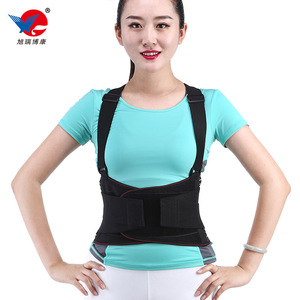
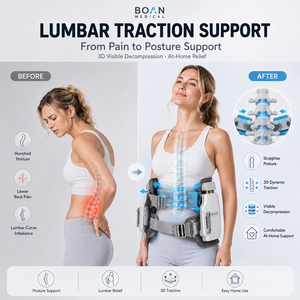
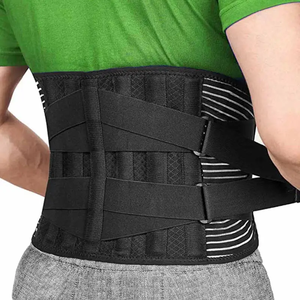
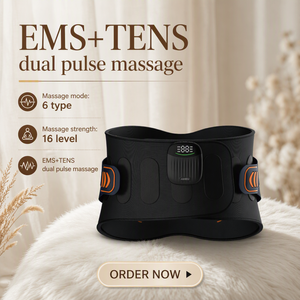
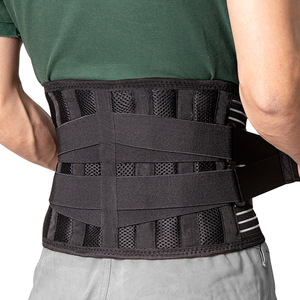
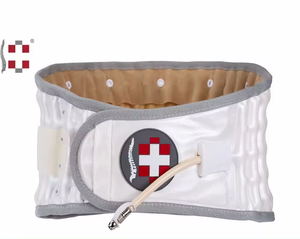
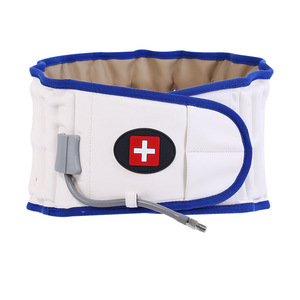
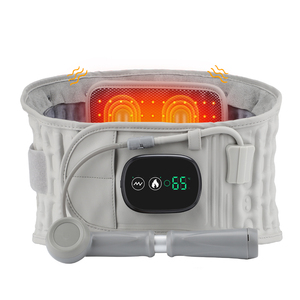
Executive Whitepaper: The Bioengineering of Lumbar Spinal Decompression Belts
Chronic lower back pain (LBP) stemming from herniated discs, sciatica, spinal stenosis, and degenerative disc disease (DDD) represents one of the leading global causes of disability. In medical rehabilitation and orthopedic therapy, lumbar decompression back support belts have evolved from simple elastic binders into sophisticated biomedical engineering systems capable of exerting controlled mechanical traction and intradiscal pressure relief.
Clinical Mechanics: How Decompression Belts Mitigate Spinal Stress
The lumbar spine (specifically L1 through L5-S1) bears the vast majority of axial upper-body mass. When an individual suffers from bulging or herniated lumbar discs, continuous compressive forces aggravate micro-tear inflammation and compress sciatic nerve roots. Professional-grade CE-certified spinal decompression belts operate via three core physiological principles:
Upon inflation, multi-directional air expansion columns expand vertically, pushing up against the lower rib cage and down against the pelvic iliac crest. This mechanical separation offloads body weight from the lumbar vertebrae.
By encapsulating the abdominal cavity with rigid or semi-rigid anterior panels, decompression braces elevate internal abdominal hydrostatic pressure. This creates a supportive fluid cushion anterior to the spine, reducing erector spinae muscle spasms.
Modern high-end medical braces incorporate carbon-fiber far-infrared (FIR) heating elements (reaching up to 9000mm² surface heating) paired with Electrical Muscle Stimulation (EMS) to accelerate localized microcirculation and prevent tissue ischemia during prolonged recovery.
B2B Procurement Technical Comparison Matrix
Global sourcing directors, hospital procurement agents, and medical brand managers must evaluate critical architectural parameters when selecting factory suppliers for spinal decompression belts. Below is an engineering comparison across our main product categories:
| Category & Model Variant | Primary Traction Mechanism | Materials & Textiles | Clinical Intent & Indication | OEM Customization Scope |
|---|---|---|---|---|
| Pneumatic Air Traction Belts (e.g., Inflatable Air Traction Series) |
Vertical Air Column Expansion (15–29 Air Chambers) | Medical TPU Air Chamber + Cotton Inner Lining + PU Outer Shell | Severe Lumbar Herniation, Sciatica, Post-Op Rehabilitation | Custom Air Valve Assembly, Gauge Branding, Custom Colorways |
| Rigid Orthopedic Lumbar Belts (e.g., Nylon Rigid Panel Support) |
Anterior/Posterior Rigid Splints & Mechanical Pulley Systems | High-Tensile Nylon Mesh, Ergonomic Steel/Aluminum Stays | Acute Lumbar Strain, Spondylolisthesis, Occupational Heavy Lifting | Splint Curvature Molding, Pulley Wire Gauge, Logo Embroidery |
| Active Electro-Thermal Belts (e.g., EMS & Heated Decompression Belts) |
Dynamic Pneumatic + Carbon FIR Heat + EMS Microcurrent | Neoprene Composite, Flexible Conductive Carbon Film, Battery Pack | Chronic Lower Back Stiffness, Muscle Atrophy, Home Clinic Recovery | PCB Controller Firmware, EMS Pulse Profiles, Custom Battery Casing |
| 3D Knitted Ergonomic Waist Supports (e.g., 2024 OEM Gym & Safety Braces) |
3-Dimensional Compression Weave & Flexible Silicone Pads | Breathable Nylon-Spandex Elastic Thread, Viscoelastic Lumbar Pad | Sports Injury Prevention, Daily Postural Alignment, Gym Safety | Knitting Pattern Customization, Silicone Mold Printing, Sizing Charts |
Global Sourcing Trends & Future Market Development (2025–2030)
As the medical equipment industry transitions toward value-based patient care and home-based orthopedic therapies, the market demand for CE-certified decompression belts is experiencing rapid technological evolution. Global distributors and retail buyers must align their procurement strategies with four key future trends:
Next-generation decompression belts are integrating micro-piezoresistive pressure sensors connected to smartphone apps. Patients and physical therapists can monitor real-time inflation pressure (mmHg), ensuring optimal traction force without over-stretching soft tissues.
With stricter European Union environmental regulations (such as REACH and RoHS), factories are shifting toward OEKO-TEX certified recycled polyester, solvent-free TPU laminates, and silver-ion infused anti-microbial linings that prevent odor build-up during extended wear.
Distributors are favoring multi-modal designs that allow users to interchange rigid support stays, pneumatic traction bladders, and battery-powered thermal massage modules within a single universal brace system, maximizing inventory SKU versatility.
E-commerce medical brands require shorter production cycles and flexible MOQs (e.g., starting at 200–500 pcs) for custom colorways and private labeling. Factories utilizing digital cutting tables and automated ultrasonic welding are leading this market shift.
Why Partner with BHW Medical Equipment Co., Ltd.?
BHW Medical Equipment Co., Ltd. is a leading ISO 13485-certified manufacturer specializing in high-grade orthopedic braces, cervical collars, knee supports, cam walker boots, and medical decompression belts. With over 20 years of dedicated production experience, our state-of-the-art facility in Xiamen, China integrates plastic injection molding, aluminum extrusion processing, automated textile sewing, and rigorous pneumatic leak detection systems.
We operate under strict CE (Class I Medical Devices) and US FDA compliance frameworks. Every batch of back support belts undergoes rigorous quality testing—including 24-hour inflation burst pressure checks, tensile strap fatigue testing, and skin-biocompatibility evaluations.
Decompression Back Support Belt Procurement FAQ
Comprehensive answers to technical, regulatory, and logistics queries for international medical distributors and wholesale buyers.
Our factory operates under an ISO 13485:2016 Medical Devices Quality Management System. All decompression back support belts and orthopedic braces carry CE certification compliant with European Medical Device Regulation (MDR 2017/745) for Class I medical devices, as well as official US FDA registration and listing. We can provide full Technical Files, Declarations of Conformity (DoC), and RoHS/REACH material safety reports for customs clearance.
Every inflatable air traction decompression belt undergoes a multi-stage quality assurance protocol. Once the TPU air chambers are RF-welded, they are pressurized to 2.5 times the recommended working pressure (exceeding standard 0.12 MPa thresholds) and held in a 24-hour inflation pressure-decay chamber. Any unit displaying a pressure drop greater than 0.5% is automatically quarantined and discarded.
We support both established medical distributors and growing healthcare brands. For custom logo application (such as woven labels, heat-transfer logos, or custom packaging inserts) on existing models, our standard MOQ is 200 to 500 units per item. For complete ODM projects requiring custom injection molds or specialized electronic PCB development (for EMS/thermal massager belts), MOQs depend on tooling specifications.
We offer standard poly-bag neutral packaging (free of charge) packaged in heavy-duty 5-ply export master cartons. For retail-ready brands, we provide full custom offset-printed color gift boxes, blister packaging, zipper carry pouches, and custom multi-language user instruction manuals. Custom packaging requires a minimum run of 500 to 1,000 units.
In-stock neutral samples can be dispatched within 3 to 5 business days. Custom branded samples (with logo printing) typically require 7 to 10 days. For standard mass production orders (1,000 to 5,000 units), our manufacturing lead time is 30 to 35 days after deposit confirmation and artwork approval.
Our standard B2B payment terms are T/T (Telegraphic Transfer) 30% to 50% deposit upon purchase order confirmation, with the balance due prior to shipment release or against Bill of Lading (B/L) presentation. We also accept L/C at sight for large contract orders. We offer FOB (Xiamen/Shenzhen), CIF, DDP, and door-to-door express courier (DHL/FedEx/UPS) freight options through long-standing logistics partners.
Ready to Elevate Your Orthopedic Product Portfolio?
Contact BHW Medical's engineering and export team today to request product samples, factory audit reports, or competitive OEM/ODM wholesale pricing for CE-certified decompression back belts.