Medical-Grade Anti-Embolism Thigh High Stockings Portfolio
Precision-knitted anatomical compression garments manufactured under strict ISO 13485 protocols. Custom pressure gradient calibration (Class I 13-18 mmHg, 15-20 mmHg, Class II 20-30 mmHg) tailored for hospital networks, surgical recovery centers, and medical distributors.
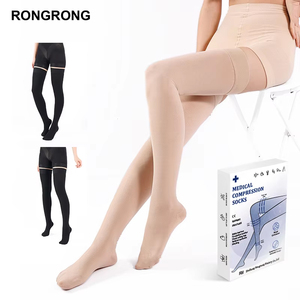
Anti-Slip Silica Support Stockings Varicose Veins Closed Cuff
Engineered with a hypoallergenic dot-matrix silicone band to eliminate roll-down during ambulation. Optimized for post-surgical varicose vein recovery and mild venous edema.
- Compression Profile: Graduated (100% Ankle - 40% Thigh)
- Toe Design: Closed Cuff Reinforced Toe
- Fabric Blend: 75% Polyamide, 25% Elastane
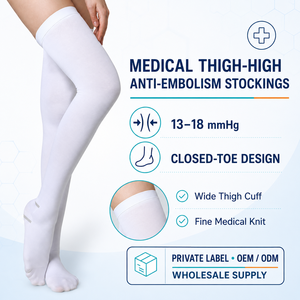
Wholesale Medical Anti Embolism Stockings Thigh High Closed Toe
Bulk hospital supply specification with reciprocal heel pocket for accurate anatomical positioning. Designed to prevent deep vein thrombosis in bedridden patients.
- Pressure Standard: 18 mmHg Ankle Gradient
- Sizing Matrix: Small to XXL (Color-Coded Band)
- Sterilizable: Autoclave / EO Compatible
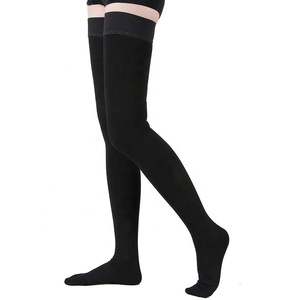
Thigh High Compression Socks Custom Moderate Pressure 20-30 mmHg
Heavy-duty circular knit structure targeting severe venous insufficiency, chronic edema, and post-thrombotic syndrome management. Reinforced heel and toe stress points.
- Target Pressure: 20-30 mmHg (Medical Class II)
- Weave Type: High-Density Micro-Mesh Knit
- Gender: Unisex Ergonomic Fit
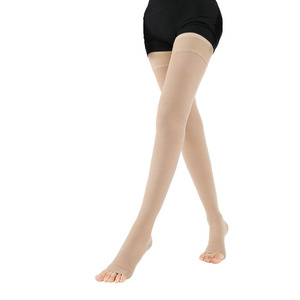
Open Toe Anti Embolism Stockings 15-21 mmHg Travel & Flight
Features an accessible open-toe structure allowing rapid capillary refill diagnostic checks. Ideal for extended immobility during long-haul flights and outpatient recovery.
- Toe Option: Open Toe (Clinical Inspection)
- Breathability: High Air Permeability Index
- Moisture Wicking: Hydrophilic Yarn Finished

15-20mmHg Anti-Embolism Thigh High Defined Heel Inspection Toe
Equipped with a specialized bottom inspection aperture. Allows nursing staff to evaluate pedal pulses and skin temperature without removing the compression garment.
- Feature: Under-toe Inspection Window
- Pressure Gradient: Sigel Profile Standard
- Application: Perioperative & Inpatient Care
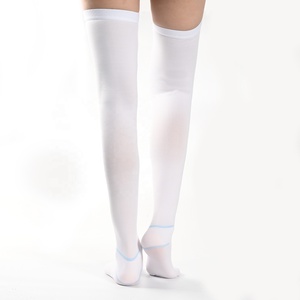
Transparent Knitted 20-30 mmHg Anti-Embolism Thigh-High Stockings
Combines medical-grade graduated compression with a high-filament sheer aesthetic. Designed for ambulatory patients demanding cosmetic discretion alongside venous support.
- Finish: Fine Sheer Transparent Fabric
- Grip Tech: Lace Top Silicone Band
- Durability: Retains Gradient After 30 Washes
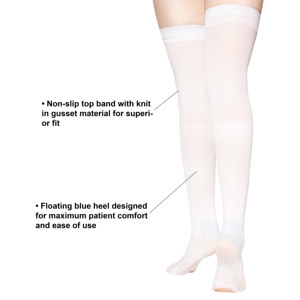
CircuGuard Thigh-High Anti-Embolism Stocking 13-18mmHg
Optimized for long-term bedridden care units and ICU immobilization. Soft skin-touch microfibers minimize shear stress and friction against delicate epidermal layers.
- Skin Protection: Zero-Friction Inner Knit
- Compression Range: 13-18 mmHg Graduated
- Compliance: FDA Registered Device
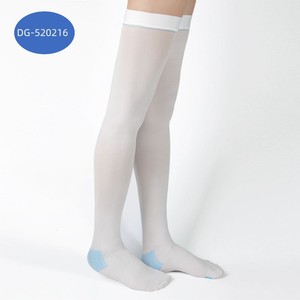
BDE High Quality Anti Embolism Compression Stockings 15-20 mmHg
Premium dual-covered elastomeric yarn construction delivering sustained multidirectional elasticity. Recommended for post-arthroplasty vascular management.
- Elasticity: Dual-Core Spandex Wrap
- Color Options: Beige / White / Black
- Packaging: OEM Medical Box / Bulk Polybag
Hemodynamic Principles & Clinical Engineering of Thigh-High Anti-Embolism Hosiery
Deep Vein Thrombosis (DVT) and its potentially fatal sequela, Pulmonary Embolism (PE), represent critical patient safety concerns in surgical, orthopedic, and extended acute-care hospital settings. Anti-embolism thigh-high stockings (TED stockings) serve as a primary non-pharmacological mechanical prophylaxis by restoring impaired venous return in non-ambulatory or perioperative patients.
The Sigel Profile Metric: Clinical effectiveness hinges upon strict adherence to the internationally recognized Sigel pressure distribution model. Medical-grade thigh-high anti-embolism stockings must exert a maximum pressure of 18 mmHg at the distal ankle, reducing continuously to 14 mmHg at the mid-calf, 10 mmHg at the popliteal space, 8 mmHg at the lower thigh, and 6 mmHg at the upper thigh.
Mechanisms of Action in Venous Velocity Enhancement
The physiological rationale of thigh-high compression over knee-high alternatives lies in the comprehensive coverage of the femoral vein system. By applying externally calibrated radial pressure, anti-embolism stockings reduce the cross-sectional diameter of deep veins in the lower extremities. According to the laws of fluid dynamics (Poisson-Bernoulli principles), reducing vascular lumen diameter increases blood flow velocity proportionally ($Q = A \cdot v$). This accelerated linear blood flow prevents stasis, minimizes venous distension, protects the endothelial lining from micro-tears, and impedes the cascade of hypercoagulability described by Virchow’s Triad.
| Anatomical Compression Zone | Pressure Target (Sigel Profile) | Vascular Target | Biomechanical Function |
|---|---|---|---|
| Distal Ankle Zone | 18 mmHg (100% Base Gradient) | Posterior & Anterior Tibial Veins | Counteracts gravitational hydrostatic pressure; drives venous pool upward. |
| Mid-Calf Zone | 14 mmHg (75-80% Gradient) | Soleal & Gastrocnemius Plexus | Supplements calf muscle pump; increases deep vascular velocity. |
| Popliteal Fossa | 10 mmHg (50-60% Gradient) | Popliteal Vein | Prevents popliteal vein collapse while preventing tourniquet constriction. |
| Lower Thigh | 8 mmHg (40-45% Gradient) | Distal Femoral Vein | Maintains upward laminar flow across the knee joint transition. |
| Upper Thigh / Groin | 6 mmHg (30-35% Gradient) | Common Femoral & Saphenous Junction | Facilitates deep venous entry into the pelvic cavity without vascular pinching. |
Circular Knitting Textile Engineering
BHW Medical utilizes computerized multi-feeder medical circular knitting machines capable of variable tension control per stitch row. The material matrix consists of high-tenacity Polyamide (Nylon 6,6) wrapped around core elastomeric Spandex threads. The inlay yarn system is dynamically modulated during the knitting cycle to achieve exact millimeter-level gradient steps along the leg's long axis.
Why Partner with BHW Medical Equipment Co., Ltd.
Established orthotics and compression device manufacturer operating certified cleanrooms, automated knitting infrastructure, and rigorous compliance systems for global healthcare brand owners.
Certified ISO 13485 & CE Facility
Our production lines comply strictly with ISO 13485 Quality Management Systems for Medical Devices. Products hold CE mark technical files and maintain active US FDA registration for seamless customs clearance.
Full OEM / ODM Customization
From private-label logo integration (MOQ 200 pairs) to custom pressure profiles (10-14 mmHg, 15-20 mmHg, 20-30 mmHg, 30-40 mmHg), custom sizing tables, and custom artwork packaging boxes.
SAG MST Pressure Validation
Every production batch undergoes dynamic pressure verification using Swiss SAG MST (Medical Stocking Tester) equipment, ensuring non-conforming pressure gradients are eliminated before packaging.
Global Sourcing Trends & Material Innovations in Medical Compression (2025–2030)
The global medical compression hosiery market is undergoing a structural paradigm shift driven by stringent regulatory overhauls (such as European EU MDR 2017/745), escalating demand for patient compliance, and eco-conscious textile sourcing. Procurement officers and medical device brand owners must align with emerging manufacturing trends to maintain competitive advantage.
1. High-Tack Anti-Slip Silicone Gel Engineering
Historical complaints regarding thigh-high anti-embolism hosiery centered on garment migration down the leg shaft during patient ambulation or bed movement. Modern OEM manufacturing incorporates bio-compatible, platinum-cured silicone grip bands. Rather than continuous solid bands that cause localized sweat accumulation and skin maceration, advanced manufacturers employ micro-dot matrix or honeycomb lattice silicone spraying. This guarantees high surface friction while preserving skin breathability and minimizing contact dermatitis risk.
2. Antimicrobial & Biocompatible Fiber Functionalization
In hospital environments, nosocomial infection control is paramount. Next-generation compression fabrics integrate silver-ion ($Ag^+$) matrix additives directly into the polymer melt prior to yarn extrusion. Unlike surface chemical dips that wash out after 5-10 laundry cycles, melt-integrated silver ions provide permanent antibacterial protection against Staphylococcus aureus and Pseudomonas aeruginosa throughout the garment's operational lifespan.
3. Sustainable Synthetic Polymer Sourcing
Leading European and North American healthcare procurement groups are actively mandating carbon-neutral supply chains. BHW Medical is pioneering the adoption of GRS-certified (Global Recycled Standard) recycled Polyamide 6,6 derived from post-industrial polymer waste, processed to maintain identical filament tensile strength, elasticity modulus, and skin non-irritation parameters as virgin fibers.
Frequently Asked Questions for B2B Buyers & Distributors
Technical, regulatory, and commercial answers to facilitate OEM partnerships and contract manufacturing orders.
Request OEM Pricing & Technical Specifications
Connect directly with BHW Medical's orthopedic textile engineers to discuss custom pressure calibration, private-label branding, evaluation samples, and wholesale volume pricing.