Expert articles, clinical guides, and manufacturing insights from BHW Medical Equipment Co., Ltd.
Connecting healthcare professionals and distributors with reliable orthopedic resources.
Choosing a China Top Medical Finger Splint Manufacturer requires more than comparing prices or product photographs. Medical finger splints support injured joints, protect healing tissues, and help patients regain controlled movement. Their design must fit real clinical needs, not only factory drawings.
The World Health Organization estimates that 2.4 billion people may benefit from rehabilitation services worldwide. This figure highlights the growing demand for practical, accessible orthotic products. The WHO’s World Report on Rehabilitation also stresses integrated care, patient function, and long-term usability. These principles matter when selecting a Medical finger splint supplier.
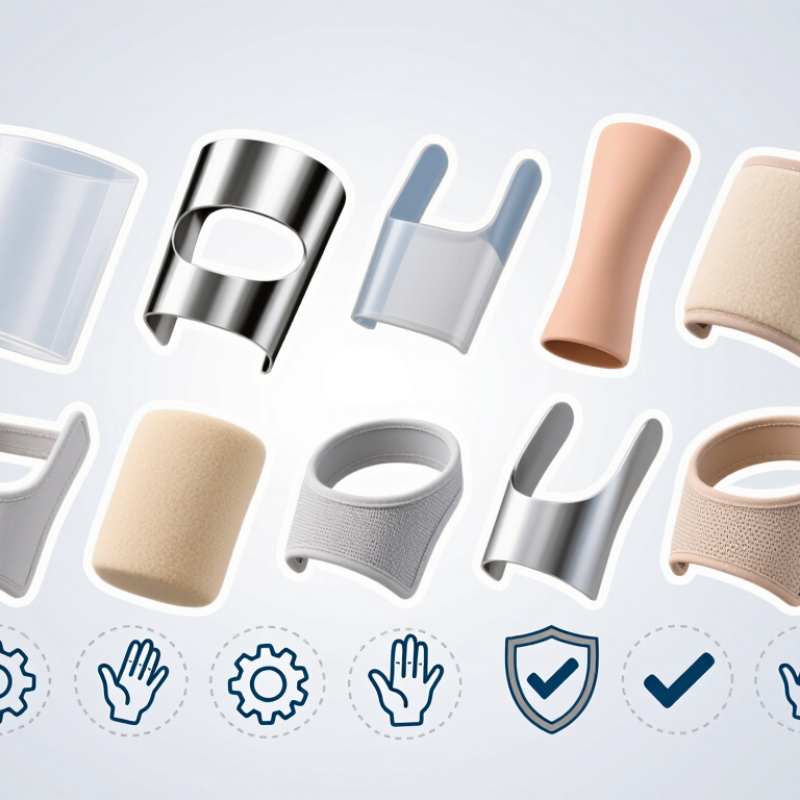
A reliable manufacturer should understand anatomy, material behavior, and clinical application. Common materials include thermoplastic sheets, aluminum, foam, silicone, and breathable fabrics. Each material affects rigidity, skin comfort, cleaning, and wearing time. A splint that feels secure at first may cause pressure after several hours.
Small details matter.
Professional buyers should examine mold accuracy, edge finishing, size consistency, and packaging protection. ISO 13485-based quality systems can support controlled medical-device production and traceability. However, certification alone does not prove excellent performance. Product testing, inspection records, sample evaluation, and communication remain essential.
China’s manufacturing sector offers flexible customization and scalable production. Experienced factories can develop mallet finger splints, trigger finger supports, stack splints, and postoperative designs. Yet, no supplier should promise universal clinical suitability. Patient conditions differ, and professional assessment remains necessary.
This guide explores how to evaluate a China Top Medical Finger Splint Manufacturer through materials, quality control, customization, compliance, and service reliability. The goal is practical judgment, not exaggerated claims. A stronger supplier is the one that explains limitations clearly.
China Top Medical Finger Splint Manufacturer
Medical Finger Splints: Definition, Uses, and Design Principles
Medical finger splints are supportive devices that protect injured joints, bones, tendons, or soft tissue. They help control movement while the finger heals. Common uses include fractures, sprains, tendon injuries, arthritis, and post-treatment support. Use varies.
A suitable splint should provide stability without creating harmful pressure. Clinicians usually assess swelling, skin color, sensation, joint position, and pain before fitting. The device may support one joint or connect two fingers for added control. Padding around bony areas can reduce rubbing, especially during sleep or daily work. Edges should remain smooth and easy to clean.
Material selection also matters. Lightweight thermoplastic, breathable fabric, and soft foam each offer different benefits. A rigid structure may protect well, but it can restrict useful movement. A flexible design feels comfortable, yet may not control the injury enough. That balance is difficult. In practice, fitters often adjust the splint after observing hand use, not just finger size. Swelling can change throughout the day, so one measurement may be unreliable. Users should regularly check for numbness, increasing pain, unusual coldness, or skin irritation. These signs require professional review. Some designs still overlook real-life tasks, such as opening containers or using a phone. Better development should combine clinical guidance, user feedback, and careful quality testing.
Finger splints are orthopedic supports designed to protect, align, or restrict movement during injury recovery. Approximate maximum active flexion values help guide splint coverage and hinge placement: the MCP joint is commonly about 90°, the PIP joint about 100°, and the DIP joint about 80°. Actual motion varies by individual, injury, and clinical condition, so splint design and fit should be assessed by a qualified healthcare professional.
China’s medical finger splint manufacturing landscape combines injection molding, thermoforming, silicone processing, and textile assembly. Many manufacturers support OEM and ODM projects, from simple aluminum foam splints to adjustable rehabilitation supports. Production usually depends on documented material traceability, controlled tooling, and repeatable quality checks. Experienced suppliers also review fit, edge comfort, ventilation, and cleaning requirements with clinical or rehabilitation professionals.
Tips: Ask for material certificates, dimensional inspection records, and sample approval before placing a large order. Check whether the supplier can provide consistent sizing across production batches. Request packaging samples too. Small details matter.
A capable manufacturer should maintain a quality management system, risk-based inspection procedures, and clear complaint handling records. Testing may include strength, flexibility, skin-contact safety, and durability after repeated adjustment. Yet no factory is perfect. A supplier may pass appearance checks while missing discomfort around a joint. This is why hands-on sample evaluation remains valuable. Photographs cannot show pressure points, weak straps, or awkward movement.
China’s competitive advantage often comes from integrated sourcing, flexible tooling, and scalable production. However, lower cost should not replace clinical thinking. Reliable cooperation requires transparent communication, stable specifications, and honest discussion when a design needs revision.
China Top Medical Finger Splint Manufacturer: Materials, Types, and Customization Options
Finger splints support injured joints, fractures, tendon repairs, and painful deformities. The need is substantial. The World Health Organization reports that 1.71 billion people live with musculoskeletal conditions worldwide. Material selection directly affects comfort, stability, skin safety, and wearing time.
Aluminum-foam splints are lightweight and easy to shape around a finger. Thermoplastic materials provide stronger customization after controlled heating. Neoprene and breathable fabric add comfort, but they offer less rigid protection. Silicone designs can reduce pressure at sensitive contact points. No single material wins every case. Clinical staff should consider swelling, moisture, skin condition, and the required immobilization level.
Common types include mallet finger splints, stack-style supports, buddy splints, and adjustable fracture splints. A reliable manufacturer should verify dimensions, edges, surface finish, and load performance through documented quality procedures. ISO 13485-based manufacturing systems can improve traceability, while ISO 10993 testing may help evaluate biological safety for patient-contacting materials. Custom options include left- or right-hand sizing, ventilation holes, radiolucent structures, color coding, printed markings, and packaging languages. Small changes matter. A two-millimeter edge adjustment may prevent rubbing during daily wear. However, customization can create new risks if measurements are incomplete. This is where suppliers and clinicians must review fit carefully, rather than trusting a drawing alone.
| Category | Common Option | Key Characteristics | Typical Use or Application | Customization Options |
|---|---|---|---|---|
| Primary Material | Aluminum with Foam Padding | Lightweight, moldable, and supported by a soft foam lining. The metal core can provide firm immobilization while the padding improves comfort. | Finger protection after minor injuries, joint support, and temporary immobilization. | Aluminum thickness, foam density, padding color, hole pattern, and overall length. |
| Primary Material | Low-Temperature Thermoplastic | Can be softened in controlled hot water and shaped around the finger. It becomes rigid or semi-rigid after cooling and is commonly reusable. | Custom-fit support for joints, tendons, and post-treatment stabilization. | Material thickness, perforation, surface texture, color, radiolucent design, and custom forming patterns. |
| Primary Material | Neoprene or Elastic Fabric | Flexible, lightweight, and comfortable for mild compression and warmth. It generally provides less rigid immobilization than metal or thermoplastic designs. | Mild support, sports protection, comfort support, and early-stage movement control. | Fabric thickness, elasticity, color, stitching, hook-and-loop closure, and thumb or finger openings. |
| Primary Material | Medical-Grade Silicone | Soft, flexible, and skin-friendly. Silicone designs can cushion pressure points and help protect sensitive areas. | Pressure relief, scar protection, cushioning, and protection from friction. | Hardness, thickness, anatomical shape, surface finish, color, and size range. |
| Splint Type | Static Finger Splint | Designed to limit movement and maintain a selected joint position. It normally has no moving hinge. | Joint protection, fracture support, tendon rest, and post-procedure immobilization when clinically indicated. | Finger length, joint angle, contour, padding, ventilation holes, and fastening method. |
| Splint Type | Stack-Style Fingertip Splint | Supports the distal interphalangeal joint while leaving the fingertip exposed in many designs. | Commonly used for distal finger joint support, including selected mallet-finger management under professional guidance. | Distal-end shape, vent openings, wall thickness, edge rounding, color, and multiple size options. |
| Splint Type | Aluminum Foam Finger Splint | Can be trimmed and shaped to fit different finger profiles. The foam surface helps reduce direct contact between the skin and metal. | Short-term stabilization and protection following minor finger trauma. | Cut length, width, foam color, adhesive layer, perforation, and packaging format. |
| Splint Type | Buddy Strap or Finger Separator | Uses an adjacent finger to provide support while allowing more functional movement than a rigid splint. | Protection and alignment support for selected minor finger injuries. | Strap width, loop size, spacer thickness, closure style, material softness, and color. |
| Splint Type | Hinged Finger Splint | Includes a controlled hinge that can permit limited movement while restricting excessive or undesired motion. | Rehabilitation programs requiring adjustable movement control, subject to clinical assessment. | Hinge resistance, movement range, hinge position, stop angle, strap configuration, and padding. |
| Size Configuration | Small, Medium, Large, and Extra Large | Standard sizing is generally based on finger circumference, width, length, or the affected joint dimensions. | Suitable for general retail, clinical, and first-aid distribution when standard sizing is appropriate. | Size chart, measurement reference points, size increments, left/right versions, and mixed-size sets. |
| Fit and Comfort | Rounded Edges and Ventilation | Rounded edges can reduce sharp contact points, while ventilation openings may improve airflow and moisture management. | Daily wear, longer support periods, and applications where skin comfort is important. | Edge radius, hole diameter, hole spacing, air-channel layout, and internal padding coverage. |
| Closure System | Hook-and-Loop Strap | Allows quick application and repeated adjustment. It is suitable for users who need flexible fastening. | Reusable finger support and products requiring frequent removal for inspection or hygiene. | Strap width, strap length, closure position, pull tab, color, and fastening strength. |
| Closure System | Elastic Loop or Slip-On Design | Provides a simple low-profile structure and can be convenient for rapid application. | Lightweight protection and mild support where frequent adjustment is not required. | Elastic tension, loop diameter, fabric composition, seam placement, and opening size. |
| Manufacturing Customization | Private-Label Packaging Without Brand Details in the Product | Packaging can be prepared with neutral product information while maintaining consistent product specifications. | General medical distribution, institutional purchasing, and standardized product programs. | Box size, instruction leaflet, barcode area, language selection, lot identification, and carton configuration. |
| Quality and Compliance | Material and Packaging Documentation | Purchasers may request material specifications, inspection records, product drawings, and packaging information for evaluation. | Supplier qualification, incoming inspection, product registration support, and quality-control procedures. | Inspection points, sampling plan, labeling format, traceability fields, and document language. |
| Product Selection Consideration | Rigid Versus Flexible Support | Rigid materials restrict movement more effectively, while flexible materials usually provide greater mobility and comfort. | Selection should reflect the required level of protection, the affected joint, skin condition, and professional recommendations. | Material combination, support level, joint coverage, padding thickness, and adjustable tension. |
Quality begins with controlled materials, not attractive packaging. A reliable Chinese medical finger splint manufacturer should verify thermoplastic sheets, foam liners, fasteners, and skin-contact surfaces before production. The WHO and UNICEF Global Report on Assistive Technology states that more than 2.5 billion people need at least one assistive product worldwide. That scale makes traceability essential.
Each splint should receive dimensional checks, joint-movement tests, edge inspections, and simulated-use assessments. Testing should cover repeated bending, strap strength, odor, skin irritation risks, and cleaning resistance. ISO 14971-based risk management helps connect each test to a specific hazard.
ISO 13485-style quality systems also require documented training, batch records, complaint handling, and corrective actions. Small details matter. A rough edge can create pressure after hours of wear.
Regulatory compliance depends on the destination market and the product’s intended use. Manufacturers should prepare technical files, risk analyses, labeling evidence, and material declarations for review. In the European market, classification and conformity assessment follow the Medical Device Regulation. In the United States, requirements may include establishment registration, device listing, quality controls, and applicable premarket pathways. These requirements can change, and one weakness remains common: suppliers sometimes test the material but not the finished splint. Practical audits, independent laboratory testing, and post-market feedback provide stronger evidence than paperwork alone.
China Top Medical Finger Splint Manufacturer
How to Evaluate and Select a Chinese Manufacturer
Selecting a Chinese medical finger splint manufacturer requires more than comparing prices. Fortune Business Insights valued the global orthopedic devices market at about USD 47.7 billion in 2023. This growth increases supplier competition, but not every factory offers reliable clinical quality. Request ISO 13485 certification, recent audit records, and product traceability documents. Check whether the certificate covers the actual manufacturing site, not only a trading office.
Ask for samples in different sizes. Examine the edges, hinges, padding, and fastening force by hand. A dependable supplier should explain material selection, cleaning instructions, and expected service life. Request test reports for biocompatibility and mechanical performance when applicable. The World Health Organization emphasizes that medical device safety depends on quality management across the full product life cycle. A polished sample alone proves very little.
Production experience matters. Review defect rates, corrective-action records, inspection plans, and worker training. Ask how the factory handles a failed batch. An honest answer is useful. Perfect statistics may deserve more questions. I would also compare pilot-order results before approving large volumes. Communication can still fail, especially when technical drawings lack tolerance details. Confirm packaging, labeling, shipment inspection, and change-control procedures in writing. The lowest quotation may hide weaker materials or unstable tooling. Good evaluation is slower, but it reduces unpleasant surprises.
Common methods include injection molding, thermoforming, silicone processing, and textile assembly. Small details matter.
Many suppliers support OEM and ODM projects, including adjustable supports and simple foam splints. Confirm every specification in writing.
Request material certificates, dimensional inspection records, traceability documents, and approved sample records. Packaging samples are useful too.
Check the edges, hinges, padding, ventilation, and fastening force by hand. Photographs cannot reveal every pressure point.
Ask for ISO 13485 certification and recent audit records. Check that certification covers the actual factory site.
Testing may cover strength, flexibility, skin-contact safety, mechanical performance, and repeated adjustment durability. Applicable testing depends on the design.
Different sizes can reveal inconsistent shaping, poor fit, or unstable production control. One sample proves very little.
Ask about corrective actions, inspection records, complaint handling, and batch isolation procedures. An honest answer matters.
Not necessarily. Lower pricing may reflect weaker materials or unstable tooling. Cost is only one part.
A pilot order can reveal sizing problems, weak straps, packaging issues, and communication gaps. I would not trust perfect statistics alone.
A medical finger splint is a supportive device designed to protect, stabilize, or properly position an injured or weakened finger. It may be used for fractures, sprains, tendon injuries, joint instability, or recovery after treatment. Effective design should balance immobilization, comfort, breathability, lightweight construction, and ease of use. Chinese manufacturers offer a broad range of splints made from materials such as thermoplastic, aluminum, foam, fabric, and medical-grade plastics, with options for different fingers, sizes, fastening systems, and customized shapes.
When selecting a Chinese manufacturer, buyers should evaluate production experience, material traceability, quality management, product testing, packaging controls, and regulatory documentation. Reliable suppliers should demonstrate consistent manufacturing processes, dimensional accuracy, skin-contact safety, durability, and clean production practices. Clear communication about specifications, sampling, customization, lead times, inspection procedures, and after-sales support is also essential. A careful evaluation helps ensure that the final medical finger splint meets intended clinical, functional, and market requirements.