Choosing a reliable China Surgical post-op shoe supplier requires more than comparing online prices. Hospitals, clinics, and distributors need products that support recovery, fit different feet, and remain consistent across repeated orders. A low quotation may hide weak stitching, unstable soles, or unclear sizing. That mistake becomes expensive when patients report discomfort.
A practical evaluation starts with product evidence. Ask for material specifications, size charts, sole thickness, closure options, and recent test reports. Request samples in several sizes. Check the heel counter, hook-and-loop fastening, insole cushioning, and tread grip by hand. The shoe should feel secure without creating pressure around dressings or swollen areas. Suppliers with medical footwear experience should explain these details clearly, not rely on attractive photographs.
Factory capability matters too. Review production records, quality-control procedures, packaging standards, and order lead times. Confirm whether the supplier can maintain the same materials after the first shipment. Clear communication is essential. Written specifications reduce misunderstandings about logos, cartons, labels, and replacement policies. Where appropriate, verify compliance with the destination market’s applicable requirements through qualified professionals.
No supplier is perfect. Even experienced factories can face delays, material changes, or inconsistent communication. That is why a small trial order is often wiser than a large commitment. Compare samples, inspect defect rates, and record every response. My own view is simple: the best supplier is not always the cheapest or largest. It is the partner that provides transparent evidence, stable quality, and responsible support when something goes wrong.
Understand Surgical Post-Op Shoe Types and Applications
When comparing China-based surgical post-op shoe suppliers, start with product purpose, not appearance. These shoes support recovery after foot surgery, injuries, or wound treatment. Different conditions require different structures.
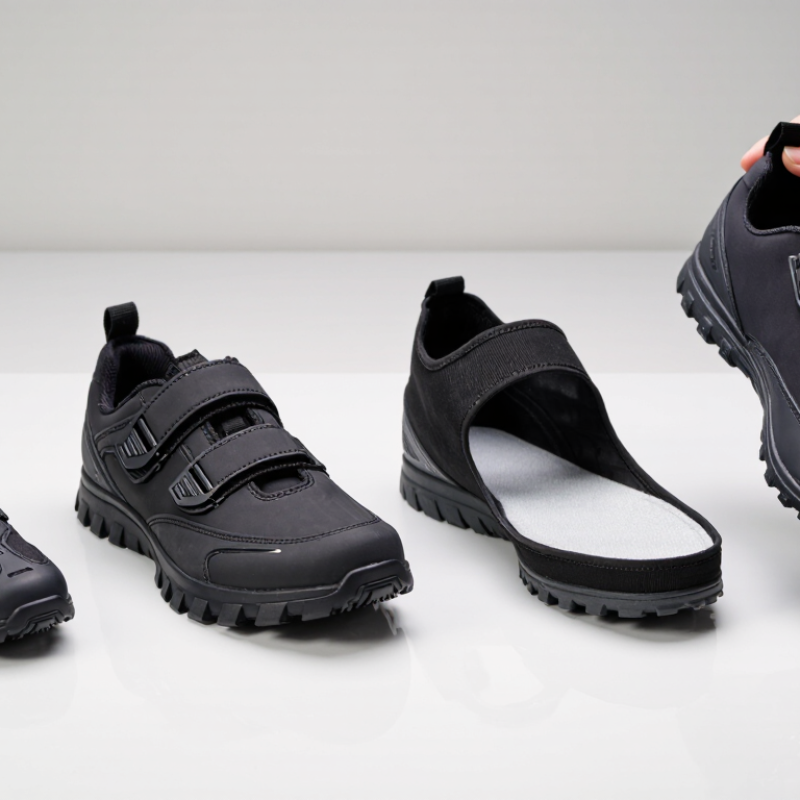
A rigid-sole post-op shoe limits forefoot bending during walking. It can suit patients recovering from toe surgery or metatarsal procedures. A rocker sole may reduce pressure during each step.
Open-toe designs allow room for dressings and swelling. Adjustable straps are useful when foot size changes during recovery. Some models support the heel better, while others focus on the forefoot.
The correct choice depends on the clinical application, not only on size.
Fit matters greatly.
Ask suppliers for sizing charts, material details, load testing, and sample approval. Check whether the sole remains stable on smooth and slightly wet floors.
Inspect stitching, strap strength, edge finishing, and odor after unpacking. A reliable supplier should explain production controls and provide clear inspection records.
It should also accept reasonable design changes without hiding limitations.
One detail is easy to underestimate: patients may wear these shoes for several weeks.
Excess weight, poor ventilation, or a confusing closure can reduce daily compliance. I have found that a visually simple design is not always the easiest to use. Sample testing with different foot shapes can reveal this weakness.
Do not choose from photographs alone. Review comfort, protection, cleaning needs, and packaging before placing a larger order.
Identify China-Based Suppliers with Relevant Manufacturing Expertise
Choosing a China-based surgical post-op shoe supplier requires more than comparing catalog photos. Look for factories with documented expertise in orthopedic footwear, medical textiles, and injection-molded soles. The Lancet Commission on Global Surgery estimated that 313 million operations were performed worldwide in 2012. That scale makes consistent recovery footwear important, especially for facilities managing many patients.
Review the supplier’s manufacturing evidence. Ask for production records, material specifications, inspection reports, and traceability procedures. ISO 13485 alignment can indicate a structured quality system, but certification alone is not enough. Check whether the factory controls heel height, toe-box space, closure strength, and sole flexibility. These details affect swelling, balance, and patient comfort. Request samples in several sizes. Test them with dressings and walking aids. A supplier may claim universal fit, yet real patients rarely have universal feet.
Tips: Compare at least three factories. Visit the production line when possible. Examine cutting, stitching, molding, and final inspection areas. Ask how rejected units are recorded. The World Health Organization identifies adverse events as a major patient-safety concern, so weak quality records deserve careful review. Also confirm testing for odor, abrasion, slip resistance, and skin-contact materials. Do not rely only on polished audit photographs. A factory can be experienced, but still need improvement. Your evaluation should reward measurable processes, not confident promises.
Relevant Standards for Evaluating China-Based Surgical Post-Op Shoe Suppliers
Use these standards as a document-checking framework when assessing manufacturing expertise. ISO 13485 supports quality management, ISO 14971 covers medical-device risk management, ISO 10993 addresses biological evaluation, ISO 15223-1 covers device-labeling symbols, and ISO 20417 defines information supplied by the manufacturer. Certification or compliance claims should be verified against current certificates, product scope, and applicable markets.
Reference: International Organization for Standardization,
ISO 13485:2016,
ISO 14971:2019,
ISO 10993-1:2018,
ISO 15223-1:2021,
ISO 20417:2021.
Verify Certifications, Factory Capacity, and Supplier Reliability
Choosing a China-based surgical post-op shoe supplier requires more than comparing catalog photos.
The WHO Global Atlas of Medical Devices identifies approximately 2 million medical device types worldwide, making product classification and documentation essential. Ask for a valid ISO 13485 certificate, factory address, certificate scope, and recent audit records. Confirm whether the certificate covers orthopedic footwear, not only unrelated products. CE documentation should match the intended market and product claims.
Factory capacity must be measurable. Request monthly output, active production lines, worker numbers, molding equipment, and peak-season lead times. A supplier claiming 50,000 pairs monthly should show production records, inspection reports, and packaging space. Check materials directly: outsole hardness, hook-and-loop strength, stitching, and sterilization compatibility. The WHO also reports that many countries face shortages in basic medical devices, so supply continuity deserves careful testing.
Reliability appears in small details.
Request pre-shipment inspection data, batch traceability, complaint procedures, and samples from regular production. Compare three sample batches, not one perfect sample. Review payment history, export experience, and references from comparable buyers. ISO’s 2023 Survey tracks ISO 13485 certification separately, but certification alone does not prove consistent quality. That distinction matters. I once treated a polished audit file as enough; it was not. A capable supplier should accept an independent factory audit, explain defects honestly, and provide corrective-action records without hesitation.
Compare Pricing, Minimum Orders, Lead Times, and After-Sales Support
When choosing China’s top surgical post-op shoe suppliers, compare landed cost, not unit price. A quoted $6 shoe can become $10 after packaging, inspection, freight, and import charges. Request prices for several quantities, such as 100, 500, and 2,000 pairs. Minimum orders often reveal factory flexibility. A low MOQ helps smaller clinics test sizing, comfort, and return rates before committing. However, tiny orders may increase production costs.
Lead time needs written milestones: sample approval, material sourcing, production, inspection, and dispatch. The World Bank’s 2023 Logistics Performance Index evaluates customs, infrastructure, shipment quality, and delivery timeliness across 139 economies. Use those risks in your planning. Ask for realistic, not optimistic, dates.
WHO reports that surgical-site infections affect about 11% of surgical patients in low- and middle-income countries. This makes clean packaging, traceability, and consistent materials practical concerns, not marketing details. ISO 13485-based quality systems can support stronger documentation, but certification alone proves little.
Tips:
Ask for a sample before the deposit. Test heel stability, sole grip, closure strength, and fit with postoperative swelling. Require batch records, inspection photos, and a replacement policy. After-sales support should define response times, defect evidence, refund terms, and spare stock. One weakness in my own buying reviews is trusting spreadsheets too quickly; a supplier may meet price targets but fail during a size shortage. Build a small pilot order into the comparison.
Conclusion
Choosing the right Surgical post-op shoe supplier in China requires a structured evaluation of product expertise, quality, and business reliability. Start by identifying the shoe types and applications you need, such as solutions for forefoot protection, heel relief, or general post-surgical recovery. Then assess whether each supplier has relevant manufacturing experience, suitable materials, stable production processes, and customization capabilities for sizing, colors, packaging, and design requirements. Comfort, adjustability, durability, and patient safety should remain key considerations throughout the review.
Before making a decision, verify the supplier’s certifications, quality-control procedures, factory capacity, and ability to provide consistent production. It is also important to compare pricing, minimum order quantities, lead times, sample policies, and after-sales support. Clear communication, transparent documentation, and responsive service can help reduce purchasing risks and prevent delays. By balancing product performance, compliance, production capability, and total cost, buyers can select a dependable supplier that supports long-term cooperation and meets the practical needs of healthcare distributors and patients.