Expert articles, clinical guides, and manufacturing insights from BHW Medical Equipment Co., Ltd.
Connecting healthcare professionals and distributors with reliable orthopedic resources.
For global buyers, finding the China Best Hinged Knee Brace Support requires more than comparing prices. A reliable brace must match the user’s injury, activity, body shape, and clinical advice. A football player may need rigid side hinges and impact-resistant shells. An office worker may prefer lighter neoprene, softer edges, and easier adjustment. The same design cannot serve every knee equally.
Orthopedic knee specialist Dr. Robert LaPrade has offered this practical reminder: “A brace should support the knee, not replace proper diagnosis and rehabilitation.” This principle matters when evaluating a Hinged knee brace support from a Chinese manufacturer. Buyers should examine hinge strength, strap placement, breathable fabric, stitching quality, and skin-contact materials. They should also request size charts, test reports, inspection records, and clear instructions for use. Small details matter. A loose strap can slip during stairs. A sharp hinge edge can irritate the skin.
Manufacturing scale is valuable, but it does not guarantee clinical suitability. Suppliers should explain quality controls, batch consistency, packaging, and customization limits. Independent verification remains wise. Product claims also need careful review, especially for international markets with different medical-device requirements. No brace is perfect. Even experienced buyers can overlook comfort after several hours of wear. That weakness deserves attention, not concealment. This guide compares Chinese hinged brace options through practical evidence, professional reasoning, and transparent limitations, helping distributors, clinics, and retailers make safer purchasing decisions for global users.
A hinged knee brace uses two side supports and mechanical hinges to guide knee movement. The hinge sits close to the knee’s natural axis. It allows bending and straightening, while reducing unwanted side-to-side motion. Some designs also shift pressure away from a painful joint area. The mechanism sounds simple, but correct alignment matters. A poorly positioned hinge may rub the skin or restrict normal walking.
The World Health Organization reported that 528 million people lived with osteoarthritis in 2019, with knees among the most commonly affected joints. This explains the growing need for practical knee support. For ligament injuries, a brace can help control movement during rehabilitation. However, it cannot repair a torn ligament or replace professional treatment. The American Academy of Orthopaedic Surgeons’ clinical practice guideline states that bracing may improve pain, function, and quality of life for some knee osteoarthritis patients. The recommendation remains conditional, not universal.
For global buyers, useful details include hinge strength, breathable materials, adjustable straps, and clear sizing measurements. A stable brace should stay in place during walking without causing numbness, swelling, or pressure marks. Buyers should also review testing records, material safety documents, and quality-control procedures. These documents support reliability, but they do not guarantee comfort for every user. In practice, fitting remains the weak point. Different leg shapes, activity levels, and injury conditions can change the result. A thoughtful evaluation is still necessary.
A high-quality hinged knee brace should feel stable, not bulky. Its polycentric hinges should follow natural knee movement during walking and bending. Adjustable straps must hold the brace without cutting circulation. A breathable, sweat-resistant lining improves comfort during long shifts or outdoor use. These details matter because the World Health Organization reported that about 528 million people lived with osteoarthritis in 2019. Many users need support for daily movement, not only sports.
Reliable construction also requires medical-minded testing. The American Academy of Orthopaedic Surgeons’ 2021 guideline noted that evidence for knee bracing differs by condition and patient. Therefore, buyers should avoid promises of universal pain relief. Look for accurate sizing charts, smooth hinge edges, reinforced stitching, and optional range-of-motion stops. A brace that slips two centimeters during a squat is not performing well, even if its materials look impressive. This is an easy detail to miss.
Tips: Check the hinge alignment beside the knee joint. Wear the brace for ten minutes before extended activity. Stop if numbness, skin damage, or unusual swelling appears. Buyers should request test reports for material safety, strap strength, and repeated-use durability. Fit remains personal; even excellent designs may need adjustment or professional assessment.
Global buyers should match the brace to the user’s activity, injury history, and required support level. A brace for daily walking differs from one used during court sports or manual work. Ask a qualified healthcare professional when pain, swelling, or instability continues. Comfort matters. If the hinge presses against the knee, users may stop wearing it.
Check the hinge design, frame strength, strap position, and inner lining. A controlled hinge can support movement without making the knee feel locked. Look for breathable materials, smooth edges, and straps that stay secure during walking. Measure the thigh and calf carefully, not just the knee. Size charts can vary between manufacturers. That detail is easy to miss.
Global purchasers should also review material information, inspection records, packaging quality, and available user instructions. Request samples before placing a large order. Test the brace after several hours, because early comfort can be misleading. Confirm whether the product suits left and right knees, and whether replacement parts are available. Some buyers focus heavily on price and overlook fitting support. That can create returns and disappointed users. A reliable supplier should answer technical questions clearly and provide consistent sizing data, though no document replaces practical evaluation.
For global buyers, a high-quality hinged knee brace begins with material selection. Neoprene provides warmth and compression, while spacer mesh improves airflow during long wear. Aluminum hinges offer controlled support with less bulk than steel. Polycarbonate components can reduce weight, but they need careful strength testing. The WHO estimates that 1.71 billion people live with musculoskeletal conditions worldwide. That scale makes comfort, durability, and consistent sizing essential, not optional.
Fit matters more. Standard sizes often range from small to extra-large, based on thigh and calf circumference. Measurement instructions should show where the tape sits, preferably with a clear diagram. A two-centimeter error can create slipping or painful pressure near the kneecap. Adjustable straps help, but they cannot correct every design weakness. Practical testing remains necessary.
Customization may include hinge motion limits, patella openings, fabric thickness, strap colors, packaging, and private-label documentation. China-based manufacturers can often support small trial orders before larger production. Buyers should request material specifications, test reports, stitching photos, and sample measurements. Grand View Research’s 2024 market analysis identifies continued growth in orthopedic braces and supports, increasing pressure for reliable product differentiation. Still, a brace can look excellent on paper and rub the skin after twenty minutes. That result needs honest review. Verify applicable quality systems, including ISO 13485 certification where relevant, and assess fit on real users before approval.
China Best Hinged Knee Brace Support for Global Buyers
Selecting a Chinese hinged knee brace supplier requires more than comparing prices. Request a factory profile, production photos, and recent inspection records. A qualified supplier should explain hinge materials, padding composition, load testing, and size-control procedures. Ask for evidence.
Certifications must match your destination market and product claims. Check the certificate number, issuing organization, validity period, and covered factory address. ISO 13485 can indicate a controlled medical-device quality system, but it does not prove every brace performs well. Review risk assessments, biocompatibility reports, labeling samples, and batch traceability. For products sold as medical devices, confirm applicable registration or conformity requirements before shipment. Requirements can differ between countries.
Order samples from regular production, not specially prepared units. Test hinge movement, strap stitching, skin comfort, and adjustment after repeated use. Small details matter. I would also request a pre-shipment inspection with photographs and measured quantities. Do not guess.
International purchasing needs clear commercial terms. Confirm the Incoterm, harmonized tariff code, carton dimensions, minimum order quantity, lead time, spare-part policy, and complaint process. Labels should include care instructions, material information, warnings, and importer details where required. Translation errors can create real problems. A written quality agreement should define acceptable defects and replacement responsibilities. Even experienced buyers can overtrust a polished sample, especially when production changes after the first order. Keep communication records and review the supplier again before larger purchases.
| Evaluation Category | Data Dimension | Buyer Benchmark or Requirement | Verification Evidence | International Purchasing Consideration |
|---|---|---|---|---|
| Product Design | Hinge configuration | Bilateral hinges should provide controlled flexion and extension while maintaining alignment during normal movement. | Product drawings, range-of-motion specifications, samples, and functional test records. | Confirm whether the design is intended for post-operative support, ligament support, rehabilitation, or general compression. |
| Fit and Sizing | Size range and measurement method | Published size charts should identify measurement location, units, tolerance, and suitable knee circumference ranges. | Approved size chart, measurement instructions, fit samples, and grading specifications. | Use both centimetres and inches when selling across markets; define whether sizing is based on knee circumference, thigh circumference, or both. |
| Materials | Textile, foam, fastener, and hinge materials | Materials should be specified by composition, thickness, coating, strength, and skin-contact properties. | Material declarations, supplier specifications, incoming inspection records, and sample approval. | Request disclosure of latex, nickel, adhesives, dyes, and other substances that may affect market access or user safety. |
| Quality Management | Manufacturing quality system | A documented quality system should control purchasing, production, inspection, traceability, complaints, and corrective actions. | Current ISO 13485 certificate, certification scope, issuing-body details, and audit status where applicable. | ISO 13485 certification is evidence of a medical-device quality management system; it is not, by itself, product approval in every destination market. |
| Regulatory Documentation | Market-specific conformity status | Regulatory requirements depend on intended use, medical claims, risk classification, and destination country. | Declaration of Conformity, technical documentation index, risk-management file, labeling review, and applicable registration records. | Do not treat a CE mark, FDA registration, or other registration reference as universal proof of approval; verify the exact product and intended market. |
| Safety and Biocompatibility | Skin-contact and user-safety assessment | Risk assessment should address prolonged skin contact, friction, pressure, sweat, cleaning, and foreseeable misuse. | Risk-management documentation and applicable biological-evaluation or material-test reports. | ISO 10993 may be relevant to medical devices with body contact; the applicable tests depend on contact type and duration. |
| Performance Testing | Hinge durability and structural strength | Testing should demonstrate that hinges, straps, stitching, closures, and stays remain functional under intended loads and repeated use. | Test method, sample quantity, conditioning details, acceptance criteria, and signed test report. | Ensure the tested configuration matches the final commercial product, including materials, stitching, packaging, and accessories. |
| Labeling and Instructions | Instructions for use and warnings | Labels should cover sizing, fitting, cleaning, storage, intended use, warnings, contraindications where applicable, and manufacturer or responsible-party information. | Artwork files, multilingual instructions, label approval records, and traceability information. | Translation, language, symbol, and importer or responsible-person requirements vary by jurisdiction and should be reviewed before shipment. |
| Batch Control | Traceability and inspection | Each production lot should be identifiable through raw materials, production records, inspection results, and shipment documentation. | Lot-number procedure, inspection plan, certificate of conformity, and retained-sample policy. | Agree on defect classification, acceptable quality limits, pre-shipment inspection, and claims procedure before placing an order. |
| Packaging | Export packaging and carton efficiency | Packaging should protect hinges and closures from deformation, moisture, contamination, and abrasion during international transport. | Packaging specification, carton dimensions, gross and net weights, drop or transport test records where required. | Confirm carton markings, pallet requirements, barcode format, country-of-origin marking, and packaging-material restrictions in the destination country. |
| Commercial Terms | MOQ, lead time, and payment terms | Terms should be confirmed separately for standard products, customized products, packaging changes, and private labeling. | Signed quotation, pro forma invoice, production schedule, sample approval record, and change-control agreement. | Use a written quotation that states currency, validity period, tooling charges, inspection responsibility, warranty, and remedy for nonconforming goods. |
| Shipping and Customs | Incoterms, tariff classification, and documents | The purchase contract should identify the agreed Incoterms® 2020 rule, named place, export documents, and customs responsibilities. | Commercial invoice, packing list, transport document, certificate of origin when required, and customs classification review. | Orthopaedic appliances may fall under HS heading 9021, but the final tariff code depends on product construction and national customs interpretation. |
| Supplier Due Diligence | Capability and reliability | Evaluate production capacity, subcontracting controls, export experience, complaint handling, business continuity, and responsiveness. | Factory audit, business registration review, certification verification, customer-reference checks, and recent quality records. | Verify certificates directly with the issuing organization where possible and ensure the certificate scope and site address match the actual manufacturing location. |
| Total Cost | Landed-cost comparison | Compare product price together with samples, tooling, testing, translation, inspection, freight, insurance, duties, taxes, and after-sales costs. | Itemized quotation, freight estimate, duty calculation, inspection fee, and documented warranty terms. | The lowest unit price may not be the lowest landed cost; compare identical specifications and delivery conditions. |
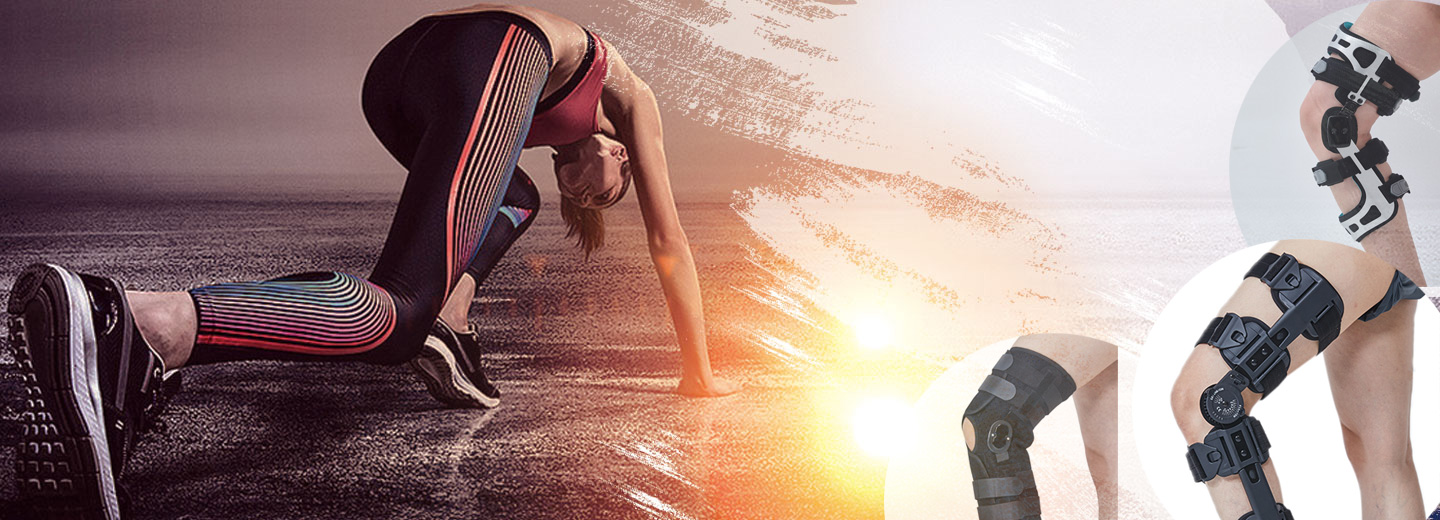
It should feel stable without becoming bulky. Polycentric hinges should follow natural knee movement. Smooth edges and reinforced stitching also matter. A strong appearance is not enough.
Measure both thigh and calf circumference carefully. Follow the supplier’s diagram. A two-centimeter mistake may cause slipping or painful pressure. Adjustable straps help, but they cannot fix every design weakness.
Neoprene provides warmth and compression. Spacer mesh improves airflow and reduces trapped sweat. Aluminum hinges can offer controlled support with less weight. Material choices still need practical testing.
Test hinge movement, strap strength, skin comfort, and repeated adjustment. Wear it for ten minutes first. Then try walking and bending. A sample may still hide production problems.
Check hinge alignment beside the knee joint. Tighten each strap evenly without restricting circulation. A brace slipping two centimeters during a squat is not performing well. Recheck the size.
Options can include motion limits, patella openings, fabric thickness, strap colors, and packaging. Some suppliers support small trial orders. Custom details should be confirmed with samples and written specifications.
Request factory information, inspection records, material specifications, and test reports. Check stitching photographs and sample measurements. Certification details should include validity and the covered facility. Do not rely on promises alone.
Confirm trade terms, tariff classification, carton dimensions, order quantity, and lead time. Labels may need care instructions, materials, warnings, and importer details. Translation mistakes can create real problems.
Stop if numbness, skin damage, or unusual swelling appears. Seek professional assessment when discomfort continues. Fit is personal. Even a well-designed brace may rub after twenty minutes.
A hinged knee brace is a supportive orthopedic device designed to stabilize the knee while allowing controlled movement. Its hinges help limit excessive side-to-side motion, while adjustable straps and shaped panels provide compression, alignment, and comfort during daily activities or sports. Effective hinged knee brace support should combine secure fitting, durable construction, breathable materials, smooth hinge movement, and reliable protection without unnecessarily restricting mobility.
For global buyers, selecting the best product requires careful consideration of the intended use, support level, sizing range, materials, and customization options such as colors, logos, packaging, or structural adjustments. Buyers should also evaluate suppliers based on production capability, quality-control procedures, communication, lead times, minimum order quantities, and internationally recognized certifications. Clear product specifications, sample testing, packaging details, shipping arrangements, and compliance documentation can help reduce purchasing risks and support consistent quality across international orders.