0%

Choosing reliable Wrist brace and thumb support suppliers in 2026 requires more than comparing product photos and wholesale prices. The World Health Organization reports that approximately 1.71 billion people live with musculoskeletal conditions worldwide. This broad demand includes wrist strain, thumb instability, arthritis, and recovery after injury. Therefore, supplier quality affects everyday comfort and clinical confidence.

Industry research also signals a growing support-products market. Grand View Research and Fortune Business Insights report continued expansion across orthopedic supports, driven by sports participation, aging populations, and online healthcare purchasing. Their market definitions differ, however. That matters. Buyers should not treat every forecast as directly comparable.

A credible supplier should provide material specifications, sizing charts, compression levels, test documentation, and traceable production records. Look for breathable neoprene, skin-friendly fabrics, reinforced thumb panels, and adjustable closures that remain secure during typing or lifting. Samples should be checked for stitching, odor, seam pressure, and movement restriction. Small details become obvious after eight hours of wear.

This guide evaluates leading 2026 suppliers through product consistency, customization, manufacturing capacity, quality systems, communication, and shipping reliability. It also considers whether suppliers support clinical, retail, private-label, and workplace applications. Certifications can strengthen trust, but they do not replace independent inspection or user testing. A supplier may look excellent on paper and still disappoint in practice. That is why transparent evidence, realistic claims, and documented customer feedback remain essential.

2026 Top Wrist Brace and Thumb Support Suppliers?

What Are Wrist Braces and Thumb Supports?

Wrist braces and thumb supports are wearable devices designed to stabilize painful or vulnerable joints. A wrist brace usually limits bending while leaving the fingers free for daily tasks. It may help after a minor strain, during repetitive work, or while sleeping. Thumb supports add targeted control around the thumb joint and wrist. They can reduce unwanted movement during gripping, typing, cooking, or lifting.

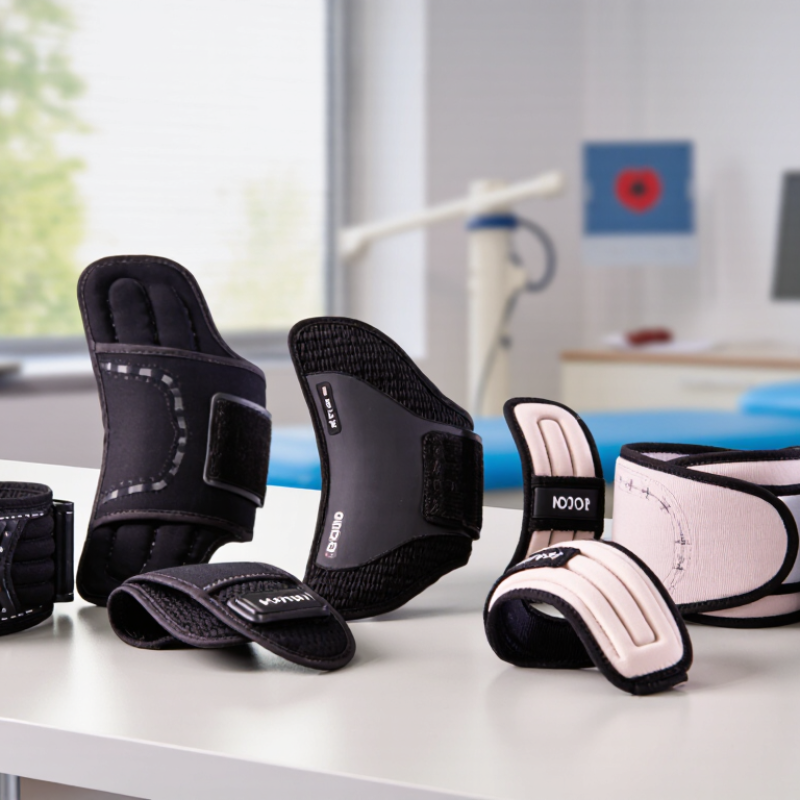
Different designs serve different needs. A soft sleeve offers warmth and gentle compression. A firmer brace uses straps, stays, or molded panels to restrict motion more clearly. Thumb spica supports commonly stabilize the thumb and part of the wrist together. Correct sizing matters. The brace should feel secure, not crushing. Fingers should remain warm, flexible, and normally colored. Check the skin after wearing it for several hours.

A useful support should match the activity and the injury stage. Excessive restriction can weaken normal movement, while too little support may provide false confidence. This point is easy to overlook. In practice, comfort often decides whether someone wears a brace correctly. However, comfort alone is not proof of effectiveness. Persistent swelling, numbness, deformity, or increasing pain deserves assessment by a qualified healthcare professional. A brace cannot repair every cause of wrist or thumb pain. Its role may be temporary, protective, or part of a guided rehabilitation plan.

How Wrist and Thumb Support Products Are Classified

2026 Top Wrist Brace and Thumb Support Suppliers?

Wrist and thumb supports are classified by anatomy, movement control, construction, and intended use. Wrist-only braces usually stabilize the radiocarpal joint, while thumb supports also control the CMC, MCP, or both joints. A thumb-spica design limits thumb motion and often extends across the wrist. It is not simply a larger wrist brace.

Construction creates another practical category. Soft supports use elastic fabric for compression and light reminders. Semi-rigid models add stays, splints, or molded panels. Rigid orthoses provide stronger immobilization after injury or surgery.

Suppliers should state the material, closure system, laterality, size range, and washable-part specifications clearly. Small details matter.

Market data shows why this classification deserves care. The World Health Organization reports that approximately 1.71 billion people live with musculoskeletal conditions worldwide. Grand View Research has also projected steady growth in the global orthopedic braces and supports market through 2030.

These figures indicate broad demand, but they do not prove that every product fits every user. The boundaries remain imperfect. A “supportive” label may describe compression, stabilization, or pain-related positioning.

Buyers should verify testing evidence, fit instructions, and intended-use claims before comparing suppliers. I would also question unusually low prices, because thinner materials and weak closures can change performance quickly.

Key Criteria for Evaluating Suppliers in 2026

When evaluating wrist brace and thumb support suppliers in 2026, begin with evidence, not polished catalogs. The World Health Organization reports that approximately 1.71 billion people live with musculoskeletal conditions worldwide. This creates demand, but demand alone does not prove product quality. Ask suppliers for test reports covering compression, joint stability, skin contact, stitching strength, and repeated washing. Request samples in several sizes. A brace that feels supportive for five minutes may become uncomfortable after eight hours.

Supplier quality systems deserve equal attention. ISO 13485:2016 provides a recognized framework for medical-device quality management, including traceability, risk control, and corrective actions. Check whether production records identify material lots, inspection dates, and responsible personnel. Also review independent testing for restricted substances and biocompatibility. “Compliant” is too vague. Require named standards and current certificates.

Clinical usability should guide the final decision. Look for adjustable closures, breathable linings, clear sizing charts, and thumb openings that avoid pressure points. Suppliers should explain how designs serve different users, including postoperative patients, office workers, and people with repetitive strain. The International Ergonomics Association emphasizes fitting products to users and tasks, not forcing users to adapt. That point is often missed. Compare defect rates, replacement handling, minimum order quantities, and delivery consistency across at least three suppliers. Forecasts can fail. A supplier with transparent limitations may be safer than one promising everything.

2026 Top Wrist Brace and Thumb Support Suppliers? - Key Criteria for Evaluating Suppliers in 2026

Evaluation Dimension Recommended 2026 Benchmark Objective Verification Evidence Suggested Weight Assessment Notes
Regulatory classification and market access Clearly documented classification for each intended market; applicable registration, listing, or conformity route completed before commercial shipment. Declaration of conformity or equivalent regulatory file, product classification rationale, registration records, and applicable labeling review. 15% Do not accept a generic certificate that does not identify the actual product, intended use, and target market.
Quality management system A documented quality system covering design control, purchasing, production, inspection, corrective action, and traceability. Current third-party audit certificate where applicable, quality manual summary, audit reports, corrective-action records, and controlled procedures. 15% ISO 13485 is the internationally recognized quality-management standard specific to medical devices; verify scope and certificate validity.
Material safety and skin contact Materials suitable for the intended duration of skin contact, with restricted substances controlled and material changes formally approved. Material specifications, supplier declarations, biocompatibility evaluation, chemical-restriction test reports, and change-control history. 12% For prolonged-contact products, review the applicable biological-evaluation rationale rather than relying only on a fabric test.
Fit, sizing, and ergonomic design At least three clearly defined size ranges or an adjustable design, with measurement instructions and left/right-hand identification. Approved drawings, size chart, anthropometric rationale, user-fit evaluation, sample review, and packaging instructions. 12% Check pressure points, thumb mobility, edge finishing, fastening access, and whether the brace can be fitted without assistance.
Mechanical performance and durability Performance requirements defined for splint stiffness, strap retention, seam strength, repeated fastening, and dimensional stability after care. Product-specific test protocol, acceptance criteria, test records, accelerated-use results, and retained production samples. 12% Use written pass/fail limits agreed before sampling; avoid evaluating durability only by visual inspection.
Clinical and usability support Claims limited to evidence-supported intended use, with user instructions that explain fitting, adjustment, cleaning, warnings, and discontinuation conditions. Clinical or usability evaluation summary, risk analysis, instructions for use, complaint trends, and post-market monitoring procedure. 10% Treat pain-relief or therapeutic claims as higher-risk claims requiring stronger supporting evidence and careful wording.
Production capacity and lead time Capacity, minimum order quantity, standard lead time, peak-season capacity, and replenishment schedule documented in writing. Capacity plan, production-flow map, recent delivery records, purchase-order terms, and contingency plan for critical materials. 8% Assess actual on-time delivery performance over recent orders instead of relying solely on quoted lead time.
Incoming, in-process, and final inspection Documented inspection points for dimensions, materials, stitching, fastening components, labels, packaging, and functional performance. Inspection plan, sampling method, calibrated equipment records, batch-release checklist, nonconformance log, and certificate of analysis when relevant. 7% Confirm that inspection records identify lot number, production date, inspector, results, and disposition.
Traceability and complaint handling Every finished lot traceable to key materials, production records, inspection results, shipment information, and complaint investigation. Lot-code structure, mock recall results, complaint procedure, investigation records, corrective-action process, and retention-period policy. 5% A supplier should be able to identify affected lots quickly when a material, labeling, or safety issue is reported.
Sustainability and supply-chain resilience Documented packaging-reduction goals, responsible-material sourcing, business-continuity planning, and qualified alternatives for critical components. Packaging specifications, environmental declarations where available, supplier-risk register, disaster-recovery plan, and dual-source evaluation. 4% Separate verified environmental data from unsubstantiated “eco-friendly” marketing statements.
Total Evaluation Weight 100% Use a documented, evidence-based supplier scorecard.

Scoring method: assign each criterion a score from 1 to 5, multiply by the suggested weight, and require satisfactory regulatory, safety, and traceability evidence before commercial approval.

Top Supplier Categories and Their Product Strengths

Wrist brace and thumb support suppliers generally fall into four practical categories: orthopedic manufacturers, rehabilitation specialists, private-label producers, and medical wholesalers. Each category serves a different purchasing need. Orthopedic manufacturers usually offer stronger material control, tested support levels, and detailed sizing charts. Their products may include rigid wrist splints, adjustable thumb spica braces, and post-injury supports.

Rehabilitation specialists often design products around daily movement and patient comfort. Breathable mesh, low-profile seams, and one-handed closures are common strengths. These suppliers may also provide fitting guidance for therapists and clinics. Private-label producers offer flexible packaging, custom colors, and adjustable production volumes. However, quality can vary between factories. A low price does not prove reliable support.

Medical wholesalers are useful for clinics needing mixed inventory and faster replenishment. They may carry several support types, sizes, and compression levels in one order. Buyers should review material safety records, inspection procedures, return policies, and product traceability.

Clear evidence matters. Supplier claims alone are not enough. A brace can look supportive yet create pressure near the thumb joint. This detail is easy to miss during remote purchasing.

Samples should be checked during typing, lifting, and light gripping. Even then, testing remains imperfect because wrist shapes and pain patterns differ. The best supplier category depends on clinical use, order volume, fitting support, and documentation quality.

How to Choose the Best Supplier for Your Needs

2026 Top Wrist Brace and Thumb Support Suppliers?

Choosing a supplier requires more than comparing unit prices. Check whether the company understands wrist anatomy, thumb positioning, and common fitting problems. Ask for material specifications, size charts, adjustment instructions, and quality-control records. A reliable supplier should explain how its braces support movement without creating unnecessary pressure. Vague answers deserve caution.

Request samples before placing a large order. Examine stitching, seams, closures, padding, and odor after unpacking. Ask how materials perform after repeated washing and daily use. Suppliers with clinical input or documented testing usually provide stronger guidance. Still, certificates alone do not guarantee comfort. A brace may pass inspection yet irritate skin during an eight-hour shift.

Review production capacity, response times, replacement policies, and communication habits. Can the supplier maintain consistent sizing across batches? Can it handle seasonal demand without changing materials unexpectedly? Written terms reduce confusion. Product photos can also mislead, especially when support levels look identical. Speak with the technical team, not only a sales representative. No supplier is perfect. A small trial order may reveal weaknesses that polished presentations hide. Consider user feedback, but verify unusual claims before relying on them.

FAQS

How are wrist and thumb supports classified?

They are classified by anatomy, movement control, construction, and intended use. Wrist braces support the wrist joint. Thumb supports also control one or two thumb joints.

What is a thumb-spica support?

It limits thumb movement and often extends across the wrist. It is not simply a larger wrist brace. Fit matters.

What are the main construction types?

Soft supports use elastic fabric for compression and light guidance. Semi-rigid designs add stays or molded panels. Rigid orthoses provide stronger immobilization after injury or surgery.

Which product details should suppliers clearly provide?

Suppliers should list materials, closure systems, left or right orientation, size ranges, and washable components. Small details matter during daily use.

How can buyers evaluate product quality?

Request tests for compression, joint stability, skin contact, stitching strength, and repeated washing. Ask for samples in several sizes. Five minutes can mislead.

What quality records should a supplier provide?

Review material-lot records, inspection dates, responsible personnel, risk controls, and corrective actions. Named standards are more useful than vague compliance claims.

What features improve everyday comfort?

Look for adjustable closures, breathable lining, low-profile seams, and thumb openings without pressure points. Test the support while typing, lifting, and gripping lightly.

What supplier categories commonly serve this market?

Orthopedic manufacturers often provide stronger materials and detailed sizing. Rehabilitation specialists focus on comfort and movement. Private-label producers offer packaging flexibility. Wholesalers support mixed inventory.

Should buyers trust unusually low prices?

Caution is reasonable. Thin materials and weak closures may reduce performance quickly. Price alone proves very little.

Can one brace suit every user?

No. Wrist shapes, pain patterns, work tasks, and recovery needs differ. Even careful testing remains imperfect. That limitation deserves honest attention.

Conclusion

A Wrist brace and thumb support is a wearable device designed to stabilize the wrist, thumb, or both while helping reduce strain during work, exercise, recovery, or daily activities. These products may be classified by support level, material, adjustability, thumb coverage, breathability, and intended use. Some are lightweight and flexible for routine comfort, while others provide firmer stabilization for rehabilitation or situations requiring limited movement.

When evaluating suppliers in 2026, buyers should consider product quality, material safety, sizing accuracy, manufacturing consistency, customization options, certifications, order capacity, delivery reliability, and after-sales service. Suppliers may specialize in medical-support products, sports equipment, ergonomic solutions, or private-label manufacturing, with each category offering different strengths. The best choice depends on the user’s support needs, target market, budget, required product features, and expected order volume. Careful comparison of samples, technical information, compliance documents, and supplier communication can help buyers select a dependable partner.

Evelyn

Evelyn

Evelyn is a seasoned marketing professional with a deep expertise in our company's product offerings. With a keen understanding of market trends and customer needs, she plays a pivotal role in enhancing our brand presence. Evelyn is responsible for regularly updating our professional blog, where......